
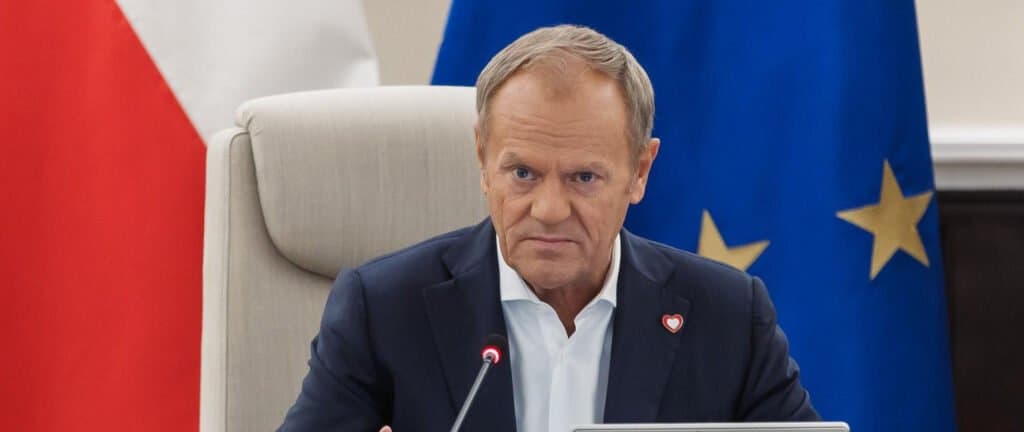

Prime Minister Donald Tusk has given a date for the opening of road and rail crossings on the border with Belarus. In accordance with a decision taken jointly with the Minister of Internal Affairs and Administration, border traffic will resume as early as midnight on 23/24 September. This is the news that the entire logistics industry has been waiting for.
A return to normality
It should be recalled that the temporary closure of the border was dictated by security reasons in connection with the Russian-Belarusian military exercises 'Zapad 2025'. The decision to reopen the crossings is a direct consequence of the end of these manoeuvres and the de-escalation of the situation in the region. However, it is worth mentioning that the closure of the borders was also significant as a geopolitical move. The closure was meant to put pressure on Belarus to stop their destabilising migrant-related activities against Poland. It was also meant to engage China, whose interests were affected due to the suspension of the railway Silk Road. The blocking of the main railway gateway to the European Union at Małaszewicze clearly violated their interests. Poland thus sought to involve China in the resolution of the crisis, suggesting that the stability of their key trade corridor depended on the cessation of destabilising activities by their Belarusian partner.
Prime Minister adds that "this tool" is still in our hands
As Prime Minister Donald Tusk stressed, the decision to open the border was taken with the interests of Polish companies and carriers in mind, including the company PKP Cargo. At the same time, the Prime Minister pointed out that this is a conditional move. In the event of renewed tension or aggressive actions by Belarus, the government is ready to take an immediate decision to close the border crossings again.
Up to 1,500 Polish lorries stuck in Belarus
The sudden closure of the border triggered an immediate and serious crisis, the scale of which was the subject of public debate. The most alarming data were presented by President of the Union of International Road Carriers (ZMPD), Jan Buczek, who estimated that up to 1,500 Polish trucks were trapped on the Belarusian side. This perspective was shared by politicians - the intervening Deputy Speaker of the Sejm, Krzysztof Bosak, spoke of 'over a thousand' vehicles. In contrast, the official government figures, presented by the Ministry of the Interior and Administration, were much lower, indicating 130 vehicles.
Regardless of the actual number, for the transport industry each detained semi-trailer meant huge losses. Hauliers stressed that the decision was taken without consultation, giving drivers "just two days" to leave Belarus. This generated gigantic costs, estimated at €350 per day for a standard semi-trailer and up to €1,000 for a refrigerated trailer. To make matters worse, drivers faced a legal risk, as Belarusian legislation allows high penalties for overstaying and, in extreme cases, even the requisitioning of vehicles. In this perspective, the decision to reopen the border was not only an economic issue, but above all a solution to the growing crisis for hundreds of Polish companies and their employees.
What's next for China's Silk Road railway once it opens?
According to the Chinese agency Yicai Global in Belarus, currently a congestion involving 130 goods trains was created ( information dated 23.09.2025). According to estimates from logistics operators, it may take seven to 10 days to unload this backlog and fully return to normal Silk Road rail operations. This means that the mere opening of the border is only the beginning of the process of restoring fluidity in supply chains.
Comments
No comments yet. Be the first to share your opinion.