
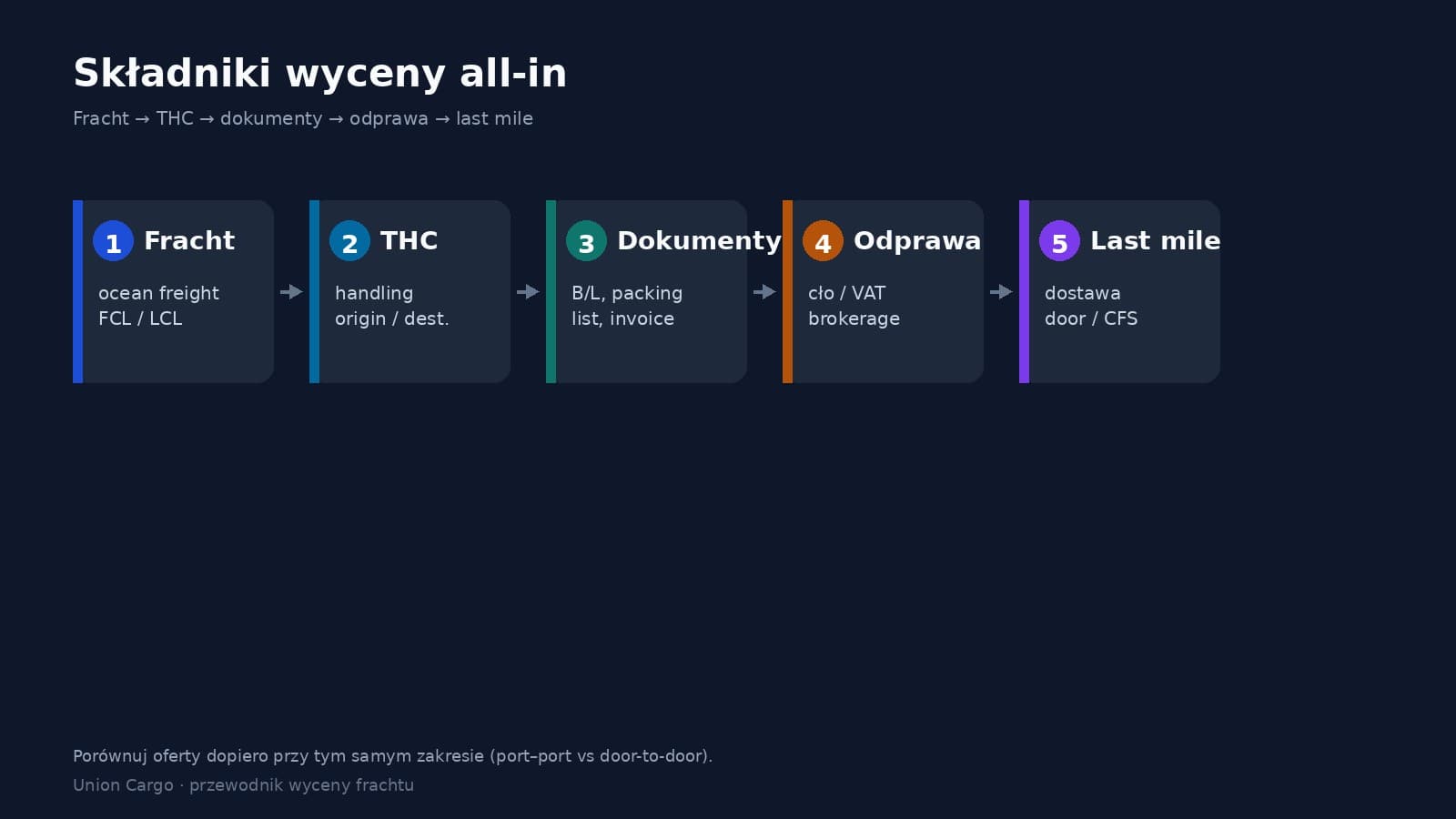

Two quotes for the same container from Ningbo to Gdańsk can be more than USD 1,000 apart, even though both end with the word ALL-IN. Usually both are correct – they just cover different parts of the journey. The first stops at the port. The second also includes terminal charges, customs clearance and delivery to your warehouse, which for a full container come to roughly USD 700–1,500 (indicative rates, September 2026).
We'll take a sea freight quote apart line by line, the way we set out our own quotes at Union Cargo. You'll see what should be in the price, what usually isn't, and how to compare offers from several forwarders. For a general overview of the service, see FCL and LCL sea freight.
What ALL-IN means in a freight quote
ALL-IN is the total cost of transport within an agreed scope: from the pickup point to the delivery point. It isn't an Incoterms rule or a legal term, so each forwarder decides what goes into it. The word on its own tells you very little. What counts is the list of items behind it.
Before you compare the totals, check three things in every quote:
- where the transport starts and ends: at the factory or at a port in China, at the port of Gdańsk or at your warehouse
- which Incoterms rule it is based on (EXW, FOB, CIF, DAP), in other words which costs your supplier covers
- what the quote explicitly leaves out of the price.
Almost every quote leaves customs duty and import VAT outside ALL-IN. These are charges owed to the state, not transport costs, so you pay them at the rates that apply to your goods. How much you pay does, however, also depend on the cost of transport – we explain why further down.
What an ALL-IN quote from Union Cargo looks like
We break every quote down into items with amounts in USD, and finish with the total and the transit time. This is the layout for an example LCL shipment bought on EXW terms:
Sea freight
EXW Shenzhen / 4 CBM / 850 kg
– ocean freight: port of Shenzhen – port of Gdańsk
– EXW costs in China: collection from the supplier, export clearance
– THC port charges
– T1 transit document
– customs clearance
– CARGO ALL-RISK insurance
– road delivery to your door
ALL-IN total: … USD
Transit time: approx. … days terminal to terminal
With a layout like this you can check any other offer against ours line by line. If one of them is missing an item, ask whether it's included somewhere else or simply not there.
Quote items from factory to warehouse
Costs in China
If you buy EXW, you take the goods over at the factory gate. So the quote has to cover transport to the port or to a consolidation warehouse, export clearance and charges at the port of loading. Under FOB the supplier pays these costs and the quote starts with the freight. If you're comparing EXW and FOB offers, check whether the difference in the supplier's price for the goods covers these costs.
The cargo also has to be declared in the EU's ICS2 security system (an ENS declaration) before it's loaded in China. Some quotes show this as a separate charge.
Ocean freight and surcharges
Freight is what the shipping line charges to carry your cargo from port to port. With FCL you pay per container: 20′, 40′ or 40′ HC. With LCL you pay per m³ or per tonne, whichever works out higher. As a rough guide (September 2026), a 40′ HC from Shanghai or Ningbo to Gdańsk cost USD 3,500–5,000, and LCL USD 120–230 per m³. These are indicative rates – the binding price is the one in our quote.
Shipping lines add surcharges to the rate: a fuel surcharge (BAF), a peak season surcharge (PSS) and, on routes to Europe, a charge linked to the EU Emissions Trading System (ETS). One quote builds them into the rate, another lists them separately. Add them to the freight before you compare.
Sea freight rates change every week, so check how long the offer is valid. It's usually the loading date that counts, not the date the quote was sent.
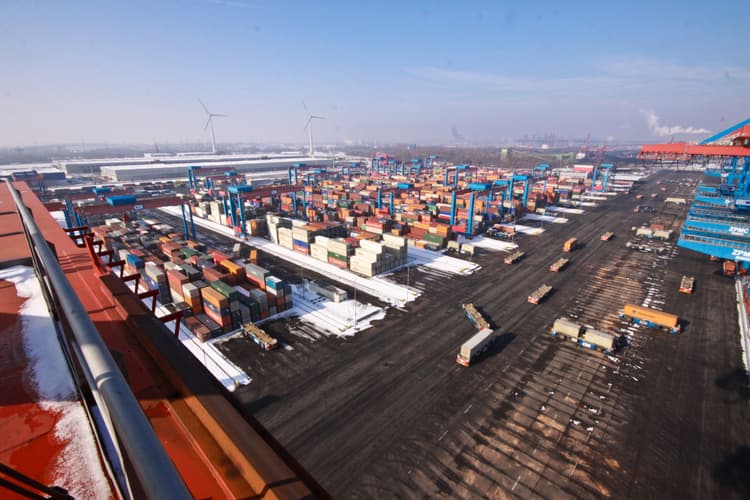
Charges at the destination port
THC (Terminal Handling Charge) is what the terminal charges for handling the container. It's paid at the port of loading and again at the destination port, for example Gdańsk or Gdynia. On top of that come local charges from the shipping line or its agent: for issuing documents and releasing the container and, with LCL, for unpacking (devanning) the container at the warehouse.
This is where the biggest trap lies when you buy LCL on CIF. The supplier pays the freight to Poland and can show you a low price, while the agent at the port charges local fees from its own price list. Sometimes USD 500 of freight ends with a bill of USD 3,000–4,000 for port charges in Gdańsk. With full containers this is less common.
Documents
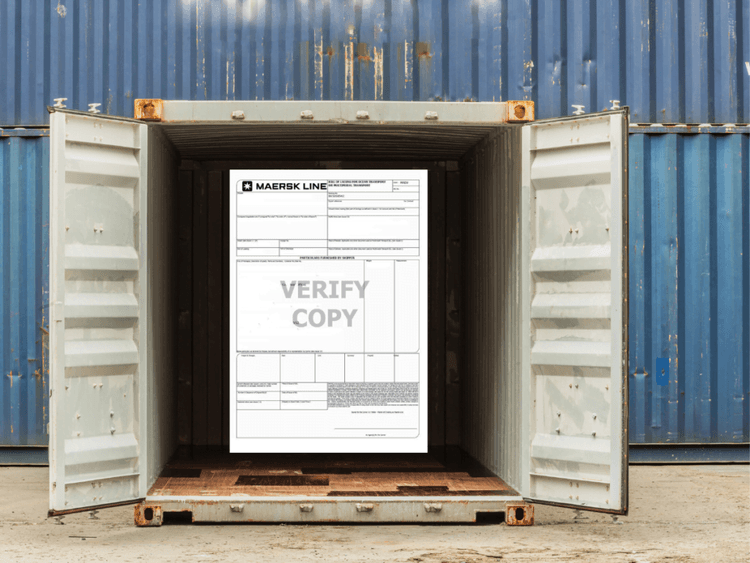
The key document is the bill of lading (B/L). The shipping line releases the goods at the destination port against it. Either the original has to reach Poland, or the supplier arranges an electronic release (telex release). With a sea waybill there is no original at all. Check whether issuing and releasing the documents is included in the price, and what a correction costs if the supplier gets the details wrong. There's more on this document in our article on the bill of lading (B/L).
Customs clearance, duty and VAT
Clearance is carried out by a customs agency, and in Poland the declaration itself usually costs around USD 50–60. In our quotes clearance is part of ALL-IN. If another quote leaves it out, that usually means it's outside the scope, not that it's free.
Duty and VAT are a separate bill. Duty is calculated on the customs value: the price of the goods plus the cost of transport and insurance to the EU border. The base for import VAT is the customs value plus duty plus transport costs to the first place of destination in the country of import. That's why a complete transport quote lets you work out the full cost of the import in advance. In Poland, VAT-registered companies can account for import VAT in their VAT return instead of paying it at clearance.
If customs selects your container for inspection, there's the cost of moving it to the inspection point and a few days' standstill. No quote can predict this, but it's worth knowing it can happen. We cover it in customs inspection of a container.
Delivery to your warehouse
A full container leaves the port on a trailer and goes straight to your warehouse, then returns empty to the depot after unloading. Ask how much unloading time is included in the price and what each extra hour of waiting costs. Once an LCL container has been unpacked, you either collect your goods from the warehouse at the port or book delivery. If you don't have a loading dock, you'll need a lorry with a tail lift. More about this leg: FTL and LTL road freight.
Cargo insurance
Without a policy, the shipping line is liable for damage only up to the limits set by international conventions, calculated per kilogram or per package. For light, valuable goods that's a fraction of what they're worth. CARGO ALL-RISK insurance usually costs a few dozen USD. It also covers general average: if costs are incurred during the voyage to save the whole cargo, every cargo owner shares them. In our quotes insurance is a separate line.
Costs you won't see in the ALL-IN total
Some costs never make it into any quote, because they depend on what happens along the way. A good offer won't promise you'll avoid them, but it will tell you clearly when they start to be charged.
- Free time – how long the container can stand at the port and at your premises without extra charges. Ask how many free days you get and when they start counting.
- Demurrage – the shipping line's charge for a full container that stays at the terminal beyond the free days, for example because clearance is waiting for documents.
- Detention – the charge for a container outside the terminal: from the moment it leaves the port until it's returned empty to the depot.
- Storage – a separate charge from the terminal or warehouse for cargo left standing there. With LCL it builds up while the goods wait for clearance.
- Rolling – your container is moved to a later sailing because the planned one is overbooked. If the rate was valid up to a specific loading date, it may change after rolling.
You can read more in our articles on demurrage and detention charges and container rolling. Most of these charges can be avoided if the clearance documents are ready before the container reaches Poland and onward transport from the port is booked in advance.
How to compare two or three quotes
Before you look at the total, make sure the terms match. You can only compare quotes:
- on the same Incoterms rule, with the same pickup and delivery points
- for the same mode: FCL with FCL, LCL with LCL
- for the same dimensions and weight, measured after packing rather than taken from a catalogue
- with a similar loading date.
Then go through them item by item: costs in China, freight with surcharges, THC at both ports, documents, clearance, delivery and insurance. Finally, compare what the total doesn't show: the number of free days, how long the offer is valid and what happens if the container is rolled. If the offers are still hard to line up, ask each forwarder for a quote in the same layout.
Sometimes a comparison like this shows it's worth looking at a different mode of transport. Rail freight from China takes around 14–22 days terminal to terminal and usually costs around 1.5 times as much as sea freight – details on our rail freight from China page. For small, urgent shipments, also look at air freight from China. If you can't decide between a full container and LCL, read FCL vs LCL – when a full container pays off and when to choose LCL sea freight.
What details to send for a quote
The more precise your details, the smaller the gap between the quote and the invoice. Have these ready:
- the supplier's address or the port in China, and the delivery address
- a description of the goods and the customs (HS) code, if you know it
- the number of cartons or pallets, their packed dimensions and weight, and the total volume in m³ (our CBM calculator will help)
- the Incoterms rule from your contract with the supplier
- the date the goods will be ready
- the scope of service: customs clearance, delivery, insurance
- whether the goods are dangerous (e.g. batteries, chemicals) or need to be kept at a controlled temperature.
Frequently asked questions
What does ALL-IN mean in a freight quote?
The total cost of transport within an agreed scope, from the pickup point to the delivery point. The forwarder sets the scope, so always check the list of items under the total.
Are duty and VAT included in the ALL-IN price?
No. They're charges owed to the state, paid at the rates for the goods in question. A transport quote helps you calculate them, because the cost of transport goes into the base for both duty and VAT.
Is THC always included in ALL-IN?
Not always. THC is paid at the port of loading and at the destination port, and under FOB the supplier covers the first of these. If a quote doesn't mention THC in Poland, ask about it directly.
What's the difference between demurrage and detention?
Demurrage is the charge for a full container standing at the terminal after the free days have run out. Detention is the charge for a container outside the terminal, for example while it's being unloaded at your premises, until it's returned empty to the depot.
Why can a cheap CIF offer end up costing more?
The supplier pays only the freight to the port in Poland, and the local charges are set by the agent at the port from its own price list. With LCL they can be several times higher than the freight itself.
How long is a sea freight quote valid?
Usually until a specific loading date, because shipping line rates change every week. Check that date in the quote before you book.
Request an ALL-IN quote
Send us your cargo details – we'll prepare an individual quote with every item listed, the transit time and a list of what isn't included. Go to the quote form.

Comments
No comments yet. Be the first to share your opinion.